Tuesday, February 3, 2009
 "BLACK VELVET ART THAT EMBRACES THE DARK SIDE OF TIKI NOW INCLUDES PASTEL TIKI ART"
ROBBHAMMEL.COM
"BLACK VELVET ART THAT EMBRACES THE DARK SIDE OF TIKI NOW INCLUDES PASTEL TIKI ART"
ROBBHAMMEL.COM
 Some great traditional skills and survival articles. Tin smithing, fire starting. etc.
Northwest Journal
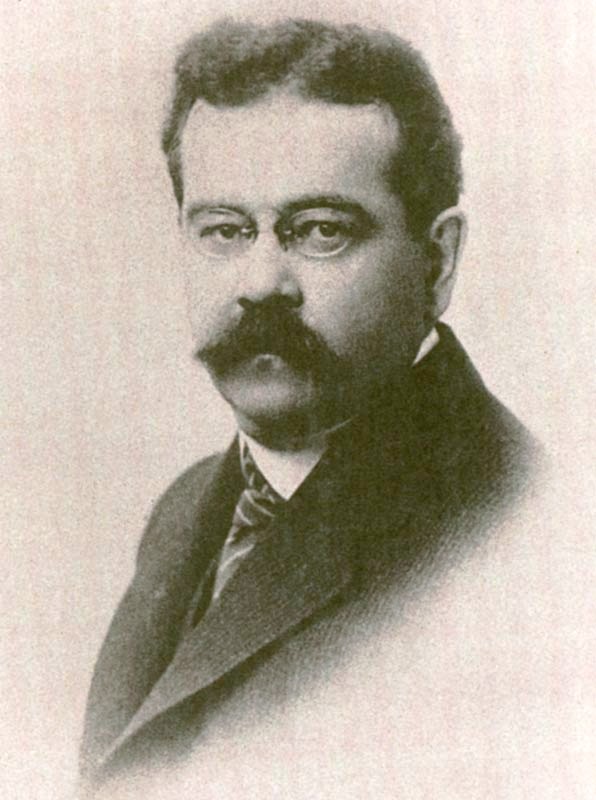 Charles Hoy Fort (August 6, 1874 – May 3, 1932) was a Dutch-American writer and researcher into anomalous phenomena. (Forteana @ Wikipedia)
"My own notion is that it is very unsportsmanlike to ever mention fraud. Accept anything. Then explain it your way."
"If there is a universal mind, must it be sane?"
John Law on Cities of the Underworld @ Make
John Law is an American artist, culture-jammer, and co-founder of the Cacophony Society and Burning Man Festival (AKA Black Rock City, AKA Zone Trip #4} which evolved out of the spirit of the Cacophony Society when a precursor solstice party was banned from San Francisco's Ocean beach and merged with another Cacophony event on the Black Rock desert in Nevada. He is from San Francisco, California. (Wikipedia)

Cryptozoology (from Greek κρυπτός, kruptos, "hidden" + zoology; literally, "study of hidden animals") is the study of and search for animals which fall outside of contemporary zoological catalogs. It consists of two primary fields of research:
Hermeticism encompasses both panentheism and Monistic-polytheism within its belief system, which teaches that there is The All, or one "Cause", of which we, and the entire universe, are all a part. Also it subscribes to the notion that other beings such as gods and angels, ascended masters and elementals exist in the Universe. (Wikipedia)
From What Kind of D&D Character Would You Be?
I Am A: Lawful Good Human Paladin/Sorcerer (3rd/3rd Level) Ability Scores:
Strength-17
Dexterity-15
Constitution-16
Intelligence-15
Wisdom-17
Charisma-16
Alignment:
Lawful Good A lawful good character acts as a good person is expected or required to act. He combines a commitment to oppose evil with the discipline to fight relentlessly. He tells the truth, keeps his word, helps those in need, and speaks out against injustice. A lawful good character hates to see the guilty go unpunished. Lawful good is the best alignment you can be because it combines honor and compassion. However, lawful good can be a dangerous alignment because it restricts freedom and criminalizes self-interest.
Race:
Humans are the most adaptable of the common races. Short generations and a penchant for migration and conquest have made them physically diverse as well. Humans are often unorthodox in their dress, sporting unusual hairstyles, fanciful clothes, tattoos, and the like.
Primary Class:
Paladins take their adventures seriously, and even a mundane mission is, in the heart of the paladin, a personal test an opportunity to demonstrate bravery, to learn tactics, and to find ways to do good. Divine power protects these warriors of virtue, warding off harm, protecting from disease, healing, and guarding against fear. The paladin can also direct this power to help others, healing wounds or curing diseases, and also use it to destroy evil. Experienced paladins can smite evil foes and turn away undead. A paladin's Wisdom score should be high, as this determines the maximum spell level that they can cast. Many of the paladin's special abilities also benefit from a high Charisma score.
Secondary Class: Sorcerers are arcane spellcasters who manipulate magic energy with imagination and talent rather than studious discipline. They have no books, no mentors, no theories just raw power that they direct at will. Sorcerers know fewer spells than wizards do and acquire them more slowly, but they can cast individual spells more often and have no need to prepare their incantations ahead of time. Also unlike wizards, sorcerers cannot specialize in a school of magic. Since sorcerers gain their powers without undergoing the years of rigorous study that wizards go through, they have more time to learn fighting skills and are proficient with simple weapons. Charisma is very important for sorcerers; the higher their value in this ability, the higher the spell level they can cast.
Find out What Kind of Dungeons and Dragons Character Would You Be?, courtesy of Easydamus (e-mail)
 State Lunatic Hospital at Danvers - website
The Danvers State Insane Asylum may have been the inspiration for H. P. Lovecraft's Arkham Sanitarium, which in turn was the inspiration for Arkham Asylum in the Batman comic book series. Danvers also appears in H. P. Lovecraft's short stories "Pickman's Model" , "Herbert West Reanimator" and "The Shadow Over Innsmouth". (Wikipedia)

Industrial archaeology, like other branches of archaeology, is the study of material culture from the past, but with a focus on industry. Strictly speaking, industrial archaeology includes sites from the earliest times (such as prehistoric copper mining in the British Peak District) to the most recent (such as coal mining sites in the UK closed in the 1980s). However, since large-scale industrialisation began only in the eighteenth century it is often understood to relate to that and later periods. Industrial archaeologists aim to record and understand the remains of industrialisation, including the technology, transport and buildings associated with manufacture or raw material production. Their work encompasses traditional archaeology, engineering, architecture, economics and the social history of manufacturing/extractive industry as well as the transport and utilities sector.
The term 'industrial archaeology' was coined in the 1950s in Birmingham, England by Michael Rix (academic) although its meaning and interpretation has changed. Its development as a separate subject was further stimulated by the campaign to save the Euston Arch. Palmer and Neaverson (Industrial Archaeology Principles and Practice, 1998) defined it as: “the systematic study of structures and artefacts as a means of enlarging our understanding of the industrial past.”
Initially practiced largely by amateurs, it was at first looked down upon by professional archaeologists. However, it has now been welcomed into mainstream archaeology. Since the timeframe of study is usually relatively recent, industrial archaeology is often (but not always) able to achieve a more reliable and absolute recording of past behaviour than is possible for the more remote past. (More at Wikipedia)

Society for Industrial Archeology

Urban exploration (often shortened as urbex or UE) is the examination of the normally unseen or off-limits parts of urban areas or industrial facilities.[1] Urban exploration is also commonly referred to as infiltration, although some people consider infiltration to be more closely associated with the exploration of active or inhabited sites. It may also be referred to as "draining" (when exploring drains) "urban spelunking", "urban caving", or "building hacking". (Urban exploration - Wikipedia)
Numbers stations (or Number stations) are shortwave radio stations of uncertain origin. They generally broadcast artificially generated voices reading streams of numbers, words, letters (sometimes using a spelling alphabet), tunes or Morse code. They are in a wide variety of languages and the voices are usually women's, though sometimes men's or children's voices are used. - Wikipedia Numbers station
 Home Security's security checkpoint measure "mal-intent" characteristics
Tech Fragments reports on Homeland Security's Future Attribute Screening Technology (FAST), which will screen people for "mal-intent" as they walk past checkpoints.
Boing Boing article
Local DIYers reclaim old junk and turn it into functional, useful stuff
"If you're not able to change it in whatever way you think is appropriate for your life, you're not really invested in it. You're just paying to use it," said Bollig, a Sun Prairie resident who recently launched madcitymakers.com to unify the scattered assortment of locals who fix, invent and re-invent.- Maisie Ramsay, Special to The Capital Times, December 31, 2008